FTC 48-Hour Breach Rule: What Businesses Must Report in 2026
Anúncios
When a cyberattack strikes your company, every minute counts—and federal regulators are no longer giving organizations weeks to figure out what happened. Under the FTC 48-Hour Breach Rule, businesses nationwide face strict new mandates in 2026 to rapidly report exposed consumer data.
Compressing incident investigation and legal review into a two-day window forces IT teams and executives to overhaul their cybersecurity playbooks immediately. Missing these tight federal notification deadlines risks steep financial penalties, regulatory audits, and lasting reputational damage.
Whether you lead a fast-growing startup or manage enterprise compliance, understanding exact disclosure triggers is critical to staying protected. Here are the key regulatory requirements, reporting thresholds, and compliance updates you need to monitor next.
Understanding the New FTC 48-Hour Breach Rule
The Federal Trade Commission (FTC) is poised to implement a transformative data breach disclosure rule, compelling nationwide businesses to report security incidents within 48 hours of discovery. This regulation, slated for enforcement in 2026, marks a significant shift from previous, often more lenient, reporting timelines.
This aggressive timeframe underscores the FTC's commitment to enhancing consumer protection and fostering greater transparency in the wake of escalating cyber threats. The rule aims to provide affected individuals and relevant authorities with timely information, enabling quicker mitigation efforts and reducing potential harm.
Anúncios
For businesses, the new FTC 48-Hour Breach Rule necessitates a complete overhaul of existing incident response protocols. It demands not only rapid detection capabilities but also streamlined communication channels and clear decision-making frameworks to meet the tight reporting window.
Defining a Reportable Data Breach
The FTC's new rule specifically targets incidents involving unauthorized access to or acquisition of sensitive consumer data. This includes, but is not limited to, personally identifiable information (PII) such as names, addresses, Social Security numbers, financial account details, and health information.
Businesses must understand that the definition of a reportable breach is broad, encompassing any event that compromises the confidentiality, integrity, or availability of consumer data. The rule emphasizes the potential for harm, rather than solely confirmed harm, as a trigger for disclosure.
This expansive scope means that even suspected breaches, if they meet certain criteria for potential harm, could fall under the FTC 48-Hour Breach Rule, requiring prompt investigation and potential reporting. Companies need robust systems to assess the nature and extent of incidents quickly.
Key Elements of the Disclosure Mandate
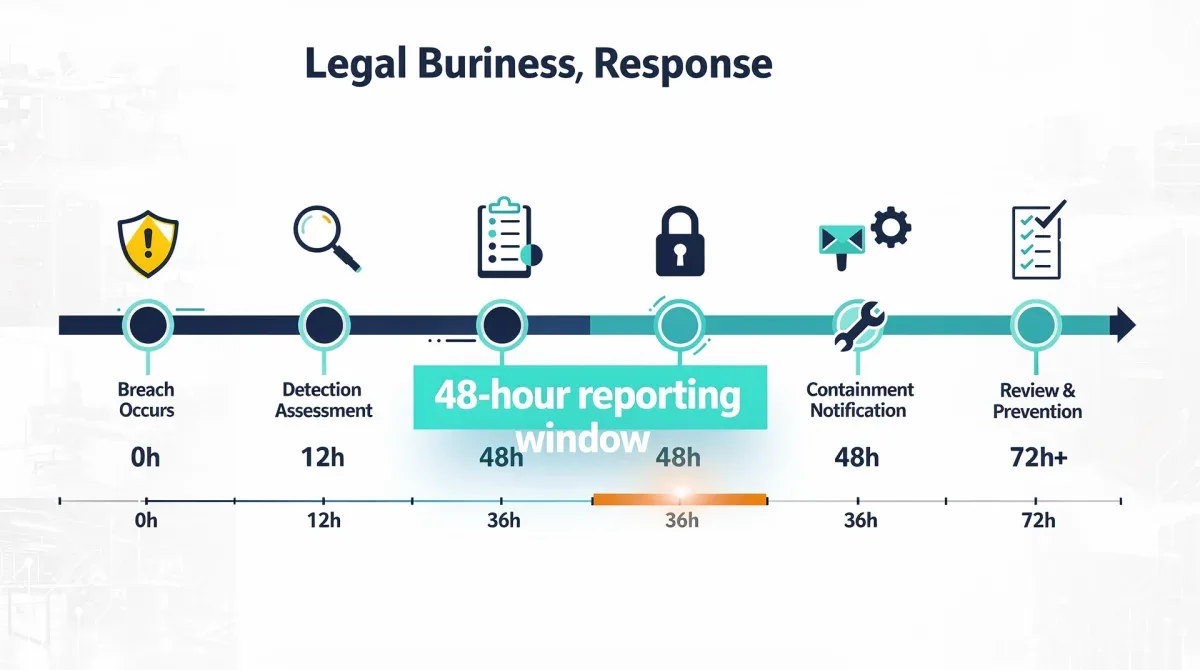
Timely Notification: Businesses must report eligible data breaches to the FTC within 48 hours of discovery.
Comprehensive Details: The disclosure must include specific information about the nature of the breach, the types of data compromised, and the number of affected individuals.
Mitigation Efforts: Companies are expected to outline the steps taken to contain the breach, mitigate its impact, and prevent future occurrences.
Contact Information: Provision of relevant contact details for further inquiries from the FTC and affected parties is also a requirement.
The new FTC 48-Hour Breach Rule is designed to ensure that businesses provide not just a notification, but a substantive report that allows the FTC to understand the incident and its potential ramifications. This requires a level of detail that many current reporting mechanisms may not readily support.
Who Must Report: Nationwide Businesses Defined
The new FTC 48-Hour Breach Rule applies broadly to "nationwide businesses" under the FTC's jurisdiction. This encompasses a vast array of entities operating across state lines or engaging in commerce that affects consumers throughout the United States, irrespective of their physical location.
This definition is inclusive, covering corporations, partnerships, sole proprietorships, and other organizations that collect, store, or process consumer data. The rule's reach extends to virtually any business handling sensitive information, making it a critical consideration for diverse industries.
Anúncios
Companies should not assume exemption based on size or sector; if they handle consumer data and operate on a national scale, they are likely subject to the FTC 48-Hour Breach Rule. Legal counsel and cybersecurity experts are advising businesses to assess their applicability proactively.
Impact on Small and Medium-Sized Businesses (SMBs)
While often perceived as regulations primarily targeting large corporations, the FTC 48-Hour Breach Rule will significantly impact small and medium-sized businesses (SMBs). Many SMBs, despite their size, handle extensive amounts of consumer data and operate nationwide.
SMBs typically possess fewer resources dedicated to cybersecurity and incident response, making compliance with the stringent 48-hour window particularly challenging. They will need to invest in upgraded security infrastructure, employee training, and robust incident response plans.
The FTC anticipates that all businesses, regardless of scale, will adapt to these requirements, emphasizing that data protection is a universal responsibility. This means SMBs must prioritize cybersecurity preparedness as much as their larger counterparts.
Preparing for the 2026 Deadline: Essential Steps
The 2026 deadline for the FTC 48-Hour Breach Rule may seem distant, but the preparatory work required is extensive and must begin immediately. Businesses need to initiate a comprehensive review of their current cybersecurity posture and incident response capabilities.
This preparation involves more than just technical upgrades; it necessitates a cultural shift within organizations, prioritizing data security and rapid response at every level. Proactive planning can significantly reduce the risk of non-compliance and the severe penalties that could follow.
Legal and IT departments must collaborate closely to develop robust strategies that address both the technical and legal aspects of the new reporting requirements. Delaying these preparations could leave businesses vulnerable when the rule takes effect.
Revising Incident Response Plans
A critical first step is to thoroughly revise existing incident response plans to incorporate the FTC 48-Hour Breach Rule's requirements. These plans must clearly define roles, responsibilities, and communication protocols for detecting, assessing, and reporting data breaches within the mandated timeframe.
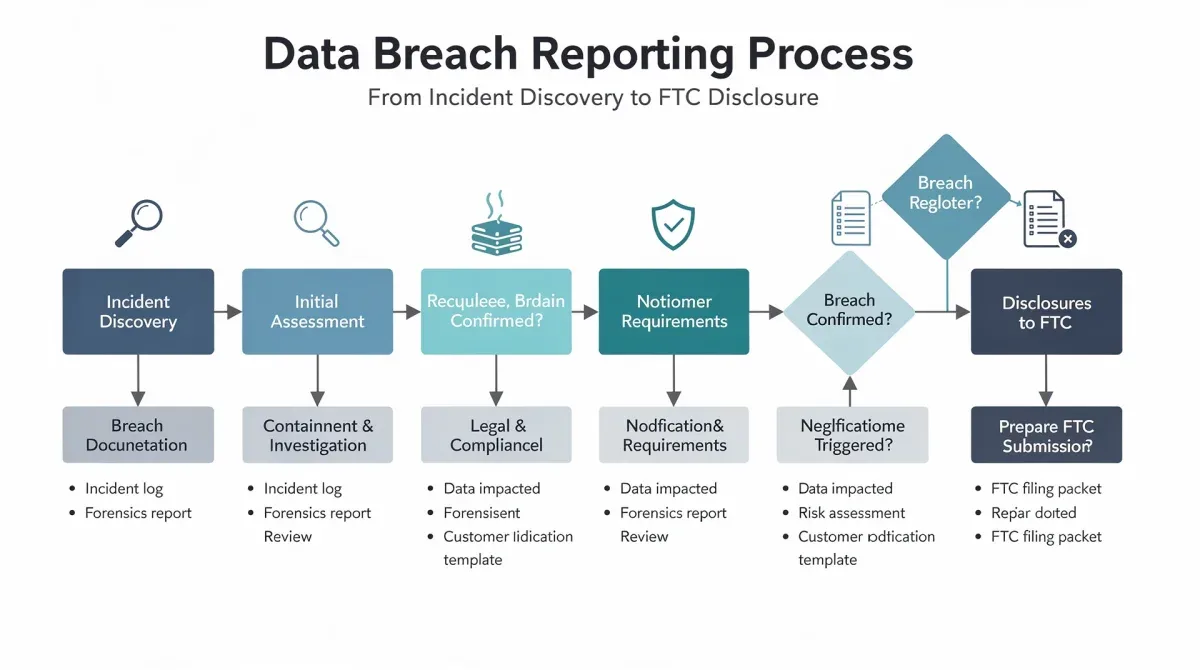
The revised plans should include detailed checklists for data collection, forensic analysis, and legal review, ensuring that all necessary information is gathered efficiently for the FTC disclosure. Regular drills and simulations are essential to test the effectiveness of these plans.
Businesses should also establish clear internal escalation paths, allowing for rapid decision-making when a potential breach is identified. This ensures that the 48-hour clock does not tick away while internal approvals are sought.
Investing in Detection and Monitoring Technologies
To meet the 48-hour reporting window, businesses must invest in advanced detection and monitoring technologies capable of identifying security incidents in real-time. This includes intrusion detection systems (IDS), security information and event management (SIEM) solutions, and endpoint detection and response (EDR) tools.
These technologies provide the visibility needed to quickly detect anomalous activities, pinpoint the source of a breach, and understand the scope of data compromise. Without such tools, businesses risk missing the reporting deadline due to delayed detection.
Furthermore, continuous monitoring is crucial, as breaches can occur at any time, often outside of traditional business hours. Automated alerts and 24/7 security operations centers (SOCs) can be invaluable in ensuring rapid response.
The Reporting Process: What Information is Required
The FTC 48-Hour Breach Rule stipulates that businesses must provide comprehensive and accurate information when reporting a data breach. This is not merely a notification but a detailed account designed to inform the FTC of the incident's specifics and the measures taken.
Providing incomplete or misleading information could lead to further scrutiny and potential penalties. Therefore, businesses must prioritize the meticulous collection and verification of all relevant data before submitting their report.
Understanding the exact requirements for the reporting process is paramount to ensuring compliance. Companies should develop templates and protocols to streamline this data collection.
Mandatory Data Elements for Disclosure
Date of Discovery: The precise date and time the breach was identified.
Nature of the Breach: A description of how the breach occurred (e.g., hacking, malware, insider threat).
Data Types Affected: Specific categories of sensitive personal information involved (e.g., Social Security numbers, credit card details).
Number of Individuals Affected: An estimate of the total number of consumers whose data was compromised.
Mitigation Actions: Steps taken or planned to contain the breach and prevent recurrence.
Contact Person: Name and contact information of an individual responsible for handling further inquiries.
The FTC intends for these data elements to provide a clear snapshot of the incident, allowing for swift assessment and potential intervention. Businesses must have systems in place to quickly compile this information.
Channels for Submission to the FTC
While the specific submission channels are still being finalized, it is anticipated that the FTC will establish a secure online portal or designated email address for breach reports. Businesses should monitor official FTC guidance for precise instructions on how to submit their disclosures under the FTC 48-Hour Breach Rule.
It is crucial to follow the prescribed submission method to ensure that reports are received and processed correctly. Companies should also retain proof of submission, such as confirmation emails or system logs, as a record of compliance.
Establishing a clear internal process for accessing and utilizing these channels will be vital for meeting the tight 48-hour deadline. This includes training relevant personnel on the submission protocols.
Consequences of Non-Compliance with the FTC 48-Hour Breach Rule
Non-compliance with the FTC 48-Hour Breach Rule carries significant consequences, ranging from substantial financial penalties to severe reputational damage. The FTC possesses broad enforcement powers, and it is expected to vigorously pursue businesses that fail to adhere to the new disclosure requirements.
Beyond direct fines, businesses may face costly litigation from affected consumers, increased regulatory scrutiny, and a loss of consumer trust. The cumulative impact of these consequences can be devastating, potentially jeopardizing a company's long-term viability.
Therefore, understanding the penalties associated with non-compliance is not just a legal formality but a critical business imperative. Proactive compliance is the most effective strategy to mitigate these risks.
Financial Penalties and Legal Ramifications
The FTC can impose civil penalties for violations of its rules, which can amount to thousands of dollars per violation per day. For a data breach affecting numerous individuals, these fines can quickly escalate into millions of dollars, creating a substantial financial burden.
In addition to direct fines, businesses may incur significant legal expenses defending against class-action lawsuits brought by affected consumers. These lawsuits can result in substantial damages payouts, further exacerbating the financial impact of non-compliance.
The legal ramifications also include potential consent decrees, which can impose strict ongoing compliance obligations and require independent audits, adding to operational costs and complexity. The FTC 48-Hour Breach Rule is a serious regulatory requirement.
Reputational Damage and Loss of Trust
Perhaps even more damaging than financial penalties is the irreparable harm to a business's reputation. A delayed or non-existent breach disclosure can erode consumer trust, leading to customer attrition and a significant decline in brand loyalty.
In today's interconnected world, news of data breaches travels fast, and a company's handling of such incidents is closely scrutinized. A perceived lack of transparency or accountability can quickly turn public opinion against a business, impacting sales and market share.
Rebuilding a tarnished reputation is a long and arduous process, often requiring extensive public relations campaigns and significant investment. The FTC 48-Hour Breach Rule emphasizes transparency precisely to mitigate this type of damage, but only if businesses comply.
Aligning with Other Data Protection Regulations
The new FTC 48-Hour Breach Rule does not operate in a vacuum; it complements and interacts with a complex web of existing data protection regulations. Businesses must ensure their incident response strategies are harmonized across all applicable laws, including state-specific breach notification laws and sector-specific regulations.
This multi-faceted regulatory landscape requires a holistic approach to data security and privacy. Compliance with one rule does not automatically guarantee compliance with others, necessitating a detailed understanding of overlapping and distinct requirements.
The challenge lies in creating a unified compliance framework that addresses the various mandates efficiently, without creating contradictory procedures. This is particularly relevant for the FTC 48-Hour Breach Rule given its broad applicability.
State-Specific Breach Notification Laws
Many states have their own data breach notification laws, some of which may have different reporting timelines or content requirements than the FTC 48-Hour Breach Rule. Businesses operating across multiple states must navigate these varying mandates carefully.
It is crucial to identify and prioritize the most stringent requirements when a breach occurs to ensure compliance with all applicable laws. Often, adhering to the strictest timeline, like the FTC's 48 hours, can help cover obligations under other statutes.
Legal teams should conduct a thorough review of all relevant state laws to develop a comprehensive incident response matrix. This matrix will guide decisions on who to notify, when, and with what information, ensuring no requirement is overlooked.
Sector-Specific Regulations (HIPAA, GLBA)
Certain industries are subject to additional sector-specific data protection regulations, such as HIPAA for healthcare entities and GLBA for financial institutions. These regulations often include their own breach notification requirements that must be considered alongside the FTC 48-Hour Breach Rule.
For example, HIPAA's breach notification rule requires covered entities and business associates to notify affected individuals and the Department of Health and Human Services (HHS) of breaches of unsecured protected health information. Similarly, GLBA has specific requirements for financial institutions.
Businesses in these sectors must ensure their incident response plans integrate all relevant regulatory obligations, creating a layered approach to compliance. The FTC 48-Hour Breach Rule adds another critical layer to this complex framework.
Future Outlook: Evolving Cybersecurity Landscape
The implementation of the FTC 48-Hour Breach Rule in 2026 is a clear indicator of the evolving cybersecurity landscape and the increasing regulatory focus on data protection. As cyber threats become more sophisticated and prevalent, it is likely that regulatory bodies will continue to introduce stricter requirements.
Businesses should view this rule not as an isolated mandate but as part of a broader trend towards enhanced accountability and transparency in data handling. Proactive adaptation to these changes will be key to long-term resilience.
Staying abreast of emerging threats and regulatory developments will be an ongoing challenge and necessity for all nationwide businesses. The FTC's rule sets a new baseline for incident response preparedness.
The Role of AI and Automation in Compliance
As the demands of compliance, particularly with the FTC 48-Hour Breach Rule, intensify, businesses will increasingly leverage artificial intelligence (AI) and automation. These technologies can significantly enhance detection capabilities, accelerate forensic analysis, and streamline reporting processes.
AI-driven security tools can identify anomalies and potential threats far more quickly than human analysts, reducing the time to detection. Automated workflows can then trigger predefined response actions, ensuring that the 48-hour window is not missed due to manual delays.
Furthermore, automation can assist in compiling the necessary data for breach reports, ensuring accuracy and completeness. Investing in these advanced technologies will be crucial for effective compliance in the coming years.
Continuous Training and Awareness
Technology alone is not sufficient; human factors remain a primary vulnerability in cybersecurity. Therefore, continuous training and awareness programs for all employees are essential to support compliance with the FTC 48-Hour Breach Rule.
Employees must be educated on identifying phishing attempts, recognizing suspicious activities, and understanding their role in reporting potential security incidents. A well-informed workforce acts as the first line of defense against breaches.
Regular training sessions, simulated phishing exercises, and clear communication about security policies can significantly reduce the risk of human error contributing to a data breach. This ongoing investment in human capital is as important as technological upgrades.
Key Point | Brief Description |
|---|---|
48-Hour Reporting | Businesses must report data breaches to FTC within 48 hours of discovery, effective 2026. |
Nationwide Scope | The rule applies to all businesses operating nationally and handling consumer data. |
Comprehensive Reporting | Disclosures require detailed information on breach nature, data types, and mitigation efforts. |
Non-Compliance Risks | Significant financial penalties and severe reputational damage for failing to comply. |
Frequently Asked Questions About the FTC 48-Hour Breach Rule
What is the core requirement of the new FTC rule?▼
The core requirement is that nationwide businesses must disclose data breaches to the Federal Trade Commission within 48 hours of discovering the incident. This stringent timeline aims to ensure rapid response and minimize potential harm to affected consumers.
When does the FTC 48-Hour Breach Rule officially take effect?▼
The new FTC 48-Hour Breach Rule is scheduled to officially take effect in 2026. Businesses have a window of time to prepare, but proactive measures are strongly advised to ensure full compliance by the deadline.
Which types of businesses are covered by this new regulation?▼
The rule applies to "nationwide businesses" under the FTC's jurisdiction, which includes a broad range of entities that collect, store, or process consumer data and operate across state lines or affect national commerce.
What kind of information must be included in a breach report?▼
Reports must detail the date of discovery, nature of the breach, types of data affected, estimated number of individuals impacted, mitigation actions taken, and contact information for further inquiries from the FTC.
What are the consequences for businesses that fail to comply?▼
Non-compliance can lead to significant financial penalties imposed by the FTC, potential legal action from affected consumers, and severe damage to the business's reputation and consumer trust, impacting long-term viability.
Looking Ahead
The FTC 48-Hour Breach Rule represents a significant shift in data breach accountability, setting a new precedent for how businesses manage cybersecurity incidents. This regulation underscores a growing global trend towards more stringent data protection mandates and increased transparency.
Businesses must recognize that this rule is not merely a compliance hurdle but an opportunity to bolster their cybersecurity defenses and enhance consumer trust. Proactive investment in robust incident response frameworks and advanced security technologies will be critical for navigating this evolving landscape.
As 2026 approaches, the focus will remain on how effectively businesses adapt to these accelerated reporting requirements. The impact of the FTC 48-Hour Breach Rule will undoubtedly shape cybersecurity practices for years to come, demanding continuous vigilance and strategic planning from all nationwide enterprises.