Audit Your 401(k) Target-Date Funds: Stop Hidden Fees
Anúncios
Could hidden administrative costs be silently eroding your retirement nest egg year after year? Checking your 401(k) Target-Date Funds is a essential financial health check, ensuring your automated lifecycle portfolio isn't bleeding compound gains to layered expense ratios.
While age-based asset allocation funds offer convenient set-and-forget diversification, many employer-sponsored plans pack underlying fund fees and sub-transfer agency charges on top of management costs. Over a full career, these seemingly small percentage points can siphon away hundreds of thousands of dollars from your final nest egg.
Taking a proactive look at your retirement account prospectus empowers you to spot high-cost share classes and switch to low-cost index alternatives. Here is how to audit your workplace investment options and protect your wealth from fee drag.
The Silent Drain: Understanding Hidden 401(k) Fees
Many Americans are unknowingly losing a significant portion of their retirement savings to hidden fees within their 401(k) plans, particularly those invested in target-date funds.
These charges, often embedded and opaque, can erode up to 2% of annual returns, a figure that compounds dramatically over decades.
Anúncios
A proactive approach to understanding and auditing these fees is not just advisable; it is a critical step for safeguarding future financial security.
Why Target-Date Funds Need Scrutiny
Target-date funds (TDFs) are popular due to their set-it-and-forget-it convenience, automatically adjusting asset allocation as retirement approaches.
However, this convenience often comes with a cost, as TDFs can have multiple layers of fees, including management fees, administrative fees, and underlying fund expenses.
These layers can obscure the true cost to investors, making it difficult to identify where your money is going and how much it is impacting your long-term growth.
The Layers of Fees in TDFs
Expense Ratios: The annual percentage deducted from a fund’s assets to cover management and operating costs.
Administrative Fees: Charges for record-keeping, legal, and accounting services, often passed on to participants.
Trading Costs: Expenses incurred when the fund buys and sells securities, which can be significant in actively managed TDFs.
It is imperative to delve beyond the surface-level expense ratio to uncover the full spectrum of costs associated with your target-date funds. Understanding these components is the first step to truly Stop Losing 2% to Hidden 401(k) Fees.
Initiating Your 401(k) Fee Audit This Quarter
Auditing your 401(k) plan requires a systematic approach, beginning with gathering all relevant documentation provided by your plan administrator.
This includes prospectuses, annual reports, and fee disclosure statements, which often contain the granular details of all charges.
Anúncios
Many participants overlook these documents, assuming their employer-sponsored plan is inherently optimized, a costly misconception.
Begin by requesting a detailed breakdown of all fees associated with your specific target-date fund. This includes both direct fees charged to your account and indirect fees embedded within the fund itself. Transparency is key, and if information is not readily available, press your plan administrator for it.
Key Documents to Review
Summary Plan Description (SPD): Outlines the plan’s features, including fees, in an understandable format.
Form 5500: An annual report filed by plan administrators with the Department of Labor, offering detailed financial information.
Prospectus/Statement of Additional Information (SAI): Provides in-depth information about mutual funds, including their investment strategies and all associated costs.
By meticulously reviewing these documents, you can start to piece together the full cost picture. This diligence is crucial if you want to Stop Losing 2% to Hidden 401(k) Fees.
Identifying Opaque and Excessive Charges
Once you have gathered the necessary documents, the next step is to carefully scrutinize each line item for any charges that seem unusually high or poorly explained.
Some fees might be labeled vaguely, making it challenging to ascertain their purpose or necessity, which is a red flag for deeper investigation.
Comparing your fund’s fees to industry benchmarks for similar target-date funds can reveal whether you are paying above-average costs. This comparative analysis is vital for identifying potential overcharges.
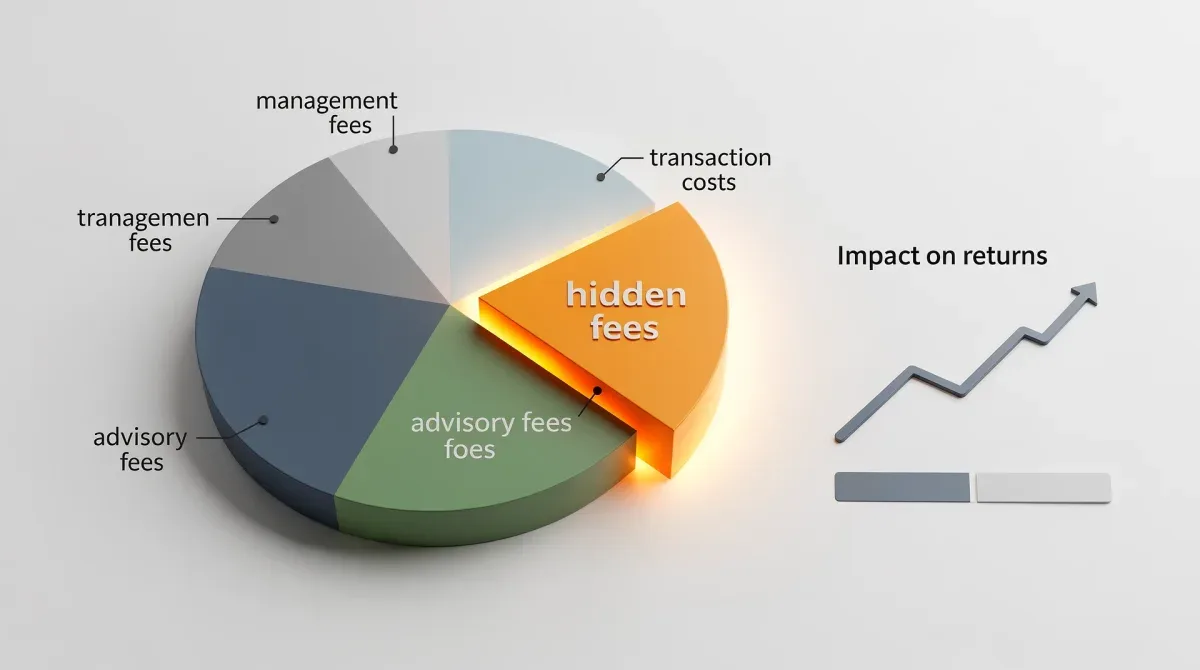
Look for terms like "revenue sharing," "12b-1 fees," or "sub-transfer agency fees" which are often indirect payments that ultimately come out of your investment returns. These can significantly impact your net gains over time. Understanding these specific fee types is critical to truly Stop Losing 2% to Hidden 401(k) Fees.
Common Hidden Fees to Spot
12b-1 Fees: Annual marketing and distribution fees, often impacting fund performance without direct benefit to the investor.
Revenue Sharing: Payments from investment providers to plan administrators, which can incentivize the offering of more expensive funds.
Wrap Fees: A single fee covering multiple services, which can sometimes mask excessive individual charges.
These charges, though seemingly small individually, accumulate to a substantial sum over decades, significantly diminishing your retirement nest egg. The goal is to Stop Losing 2% to Hidden 401(k) Fees, and this requires vigilance.
Benchmarking Your Target-Date Funds Against Competitors
After cataloging your current fees, the next crucial step is to compare them against similar target-date funds available in the market or through other 401(k) plans.
Utilize financial tools and independent research platforms to find average expense ratios and administrative costs for funds with similar asset allocations and target retirement dates.
This benchmarking provides context, indicating whether your plan’s offerings are competitive or if you are indeed paying a premium for comparable investment exposure.
Consider looking at funds from major providers like Vanguard, Fidelity, and Schwab, which are often known for their lower-cost index-based target-date funds. Their fee structures can serve as a valuable yardstick. A significant discrepancy suggests you might be losing more than necessary.
Where to Find Benchmarking Data
Morningstar: Offers comprehensive fund analysis, including expense ratios and peer group comparisons.
FINRA Fund Analyzer: A free tool to compare costs and performance of different mutual funds.
Department of Labor Resources: Provides guidance on 401(k) fees and fiduciary responsibilities, helping you understand what to look for.
This comparative analysis is not merely academic; it provides concrete evidence to support potential discussions with your plan administrator. The objective is clear: Stop Losing 2% to Hidden 401(k) Fees by ensuring your funds are cost-efficient.
Engaging Your Employer or Plan Administrator
Once you have identified potentially excessive or hidden fees, the most effective course of action is to communicate your findings to your employer or the 401(k) plan administrator.
Present your audit results clearly and concisely, highlighting the specific fees you believe are detrimental to participant returns.
Employers, as plan fiduciaries, have a legal obligation to ensure that plan fees are reasonable and that investment options are prudent. Your informed inquiry can prompt them to review the plan's offerings.
Suggest alternative, lower-cost target-date funds or other investment vehicles that align with the plan's objectives but offer better value. Many employers are receptive to feedback that can improve employee benefits and reduce potential fiduciary liability. This dialogue is essential to Stop Losing 2% to Hidden 401(k) Fees.

Tips for Effective Communication
Be Prepared: Have all your research and data organized to support your claims.
Focus on Solutions: Instead of just complaining, offer viable, lower-cost alternatives.
Highlight Fiduciary Duty: Remind your employer of their legal obligation to act in the best interest of plan participants.
A well-reasoned argument, backed by solid data, is far more likely to instigate change. This step empowers you and potentially many other participants to Stop Losing 2% to Hidden 401(k) Fees.
Strategies for Reducing Your 401(k) Fee Exposure
Beyond advocating for plan changes, there are individual strategies you can employ to minimize your exposure to high fees in your 401(k).
If your plan offers a brokerage window, consider utilizing it to access a broader range of lower-cost index funds or ETFs that may not be directly available in the default fund lineup.
Alternatively, if your plan's target-date funds are demonstrably expensive, evaluate whether a self-managed portfolio of low-cost index funds within the 401(k) might be a more cost-effective option, provided you are comfortable with managing your own asset allocation. This is a crucial step to Stop Losing 2% to Hidden 401(k) Fees.
Alternative Investment Approaches
Index Funds: Generally have lower expense ratios than actively managed funds, as they simply track a market index.
ETFs (Exchange-Traded Funds): Similar to index funds but trade like stocks, offering flexibility and often low costs.
Self-Directed Brokerage: If available, allows you to choose from a wider array of investment products, including those with lower fees.
These strategies require a bit more active management on your part but can lead to substantial savings over the long term. Taking control of your investment costs is a powerful way to Stop Losing 2% to Hidden 401(k) Fees and maximize your retirement potential.
The Long-Term Impact of Fee Reduction
The seemingly small difference of 1% or 2% in annual fees can translate into hundreds of thousands of dollars over a 30-year investment horizon due to the power of compounding.
By actively working to reduce your 401(k) fees, you are not just saving money today; you are significantly enhancing your future wealth accumulation.
This quarter's audit is an investment in your retirement, ensuring that more of your hard-earned money stays invested and grows for your future. The objective is unequivocal: Stop Losing 2% to Hidden 401(k) Fees to secure your financial future.
Consider the cumulative effect: a 2% fee on a $100,000 portfolio is $2,000 annually. Over 30 years, assuming a 7% average annual return, that lost $2,000 each year could amount to a staggering sum. This illustrates why it is so important to Stop Losing 2% to Hidden 401(k) Fees and take control of your financial destiny.
Compounding Effect of Fees
Early Action: The earlier you address fees, the greater the positive impact on your final balance.
Exponential Growth: Even small fee reductions can lead to exponential gains over long periods.
Retirement Security: Maximizing returns by minimizing fees directly contributes to a more secure retirement.
The effort invested now in auditing and optimizing your target-date funds will yield substantial dividends in your retirement years. It is a fundamental principle of sound financial planning to Stop Losing 2% to Hidden 401(k) Fees and maximize your investment efficiency.
Key Point | Brief Description |
|---|---|
Hidden Fees Impact | Unseen fees can erode up to 2% of 401(k) returns annually. |
Audit Necessity | Regular auditing of target-date funds is crucial for retirement security. |
Actionable Steps | Review documents, benchmark fees, and engage plan administrators. |
Long-Term Gain | Reducing fees significantly boosts long-term retirement savings. |
Frequently Asked Questions About 401(k) Fees
What exactly are 'hidden' 401(k) fees?▼
Hidden 401(k) fees are charges that are not always obvious or clearly itemized on participant statements. These can include expense ratios of underlying funds, administrative costs, 12b-1 fees, and revenue-sharing agreements, all of which reduce your investment returns without being explicitly labeled as a direct deduction from your account balance.
How often should I audit my target-date funds?▼
It is recommended to audit your target-date funds at least once a year, ideally quarterly, to stay informed about any changes in fee structures or fund performance. Regular reviews ensure your investments remain aligned with your financial goals and that you are not unknowingly incurring excessive costs that could hinder your retirement savings.
Can I really lose 2% of my returns to fees?▼
Yes, it is entirely possible to lose 2% or more of your annual returns to various fees. While individual fees might seem small, their cumulative effect, especially when compounded over several decades, can significantly diminish your total retirement savings. This emphasizes the importance of understanding and mitigating all possible charges.
What should I do if my 401(k) fees seem too high?▼
If your 401(k) fees appear excessive, begin by compiling detailed documentation and comparing them to industry benchmarks. Then, approach your employer or plan administrator with your findings, advocating for lower-cost investment options. As a last resort, consider transferring funds to an IRA if your employer plan remains uncompetitive.
Are all target-date funds expensive?▼
No, not all target-date funds are expensive. Many providers offer low-cost, index-based target-date funds that have significantly lower expense ratios. The cost often depends on the fund provider, whether the fund is actively or passively managed, and the specific agreements within your 401(k) plan. Research is key to finding efficient options.
What This Means
This quarter's focus on auditing 401(k) target-date funds underscores a critical aspect of personal finance often overlooked by investors. The revelations about hidden fees highlight the necessity for continuous vigilance and proactive engagement with retirement accounts.
Moving forward, individuals must prioritize understanding their investment costs and advocating for transparent, lower-fee options within their plans. This shift towards greater financial literacy and active management will be pivotal in securing a more robust retirement for millions of Americans.